Research · Journal manuscript2024/25Under Review for Publication
Experimental Assessment of Demolition Waste as Coarse Aggregate in Concrete for Sustainable Construction and Waste Management
Debris from a controlled building demolition in Rupandehi was hand-crushed to 10–20 mm, tested to IS 2386, and used to replace 10%, 20% and 30% of the coarse aggregate in M20 concrete, with cubes crushed at 7, 14 and 28 days.
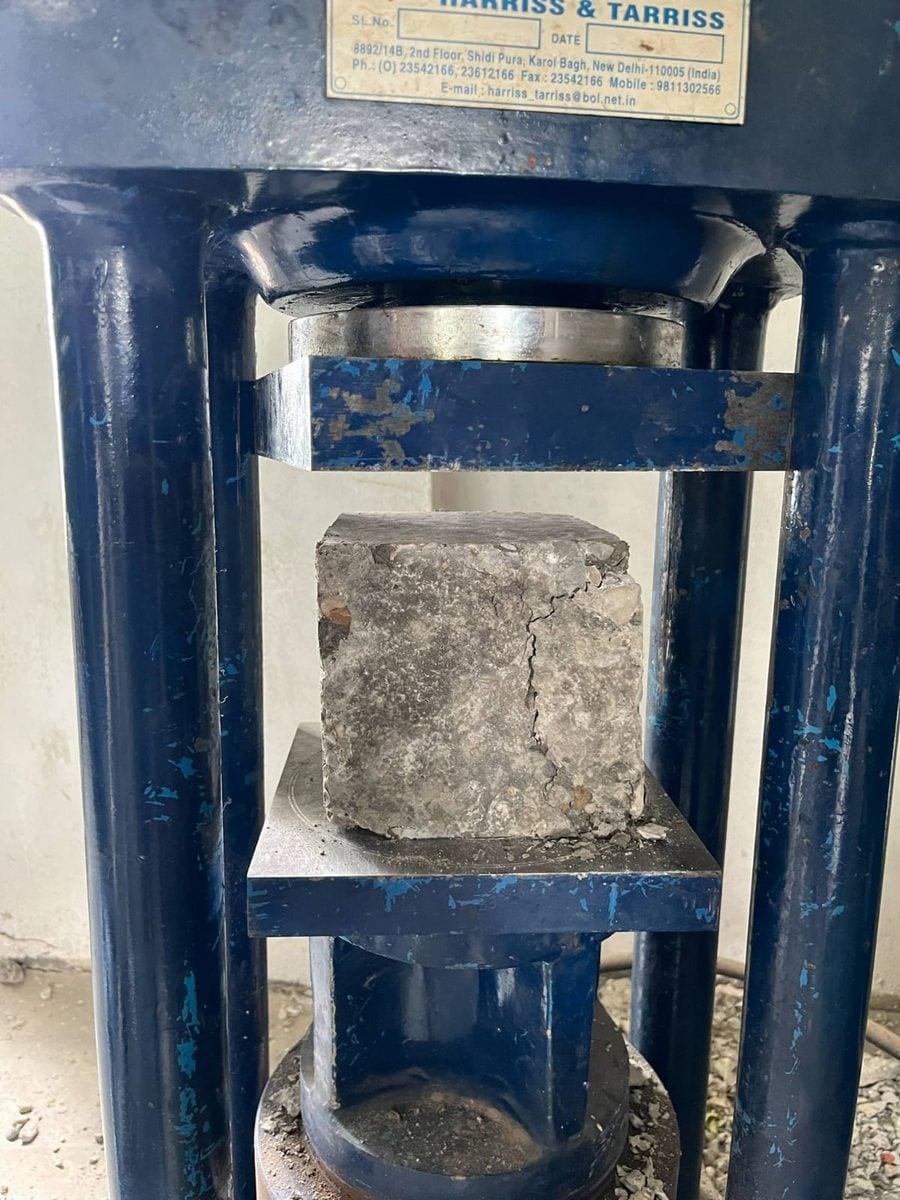
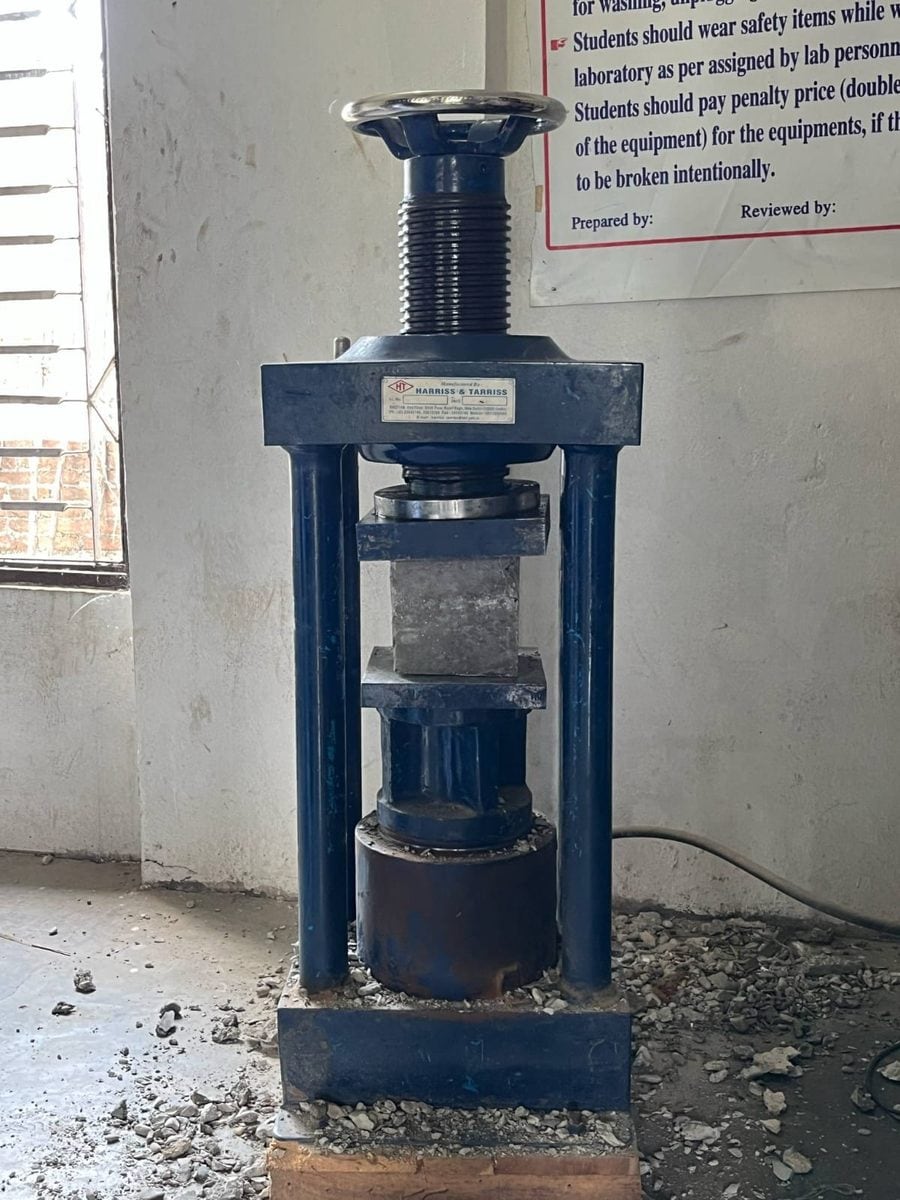
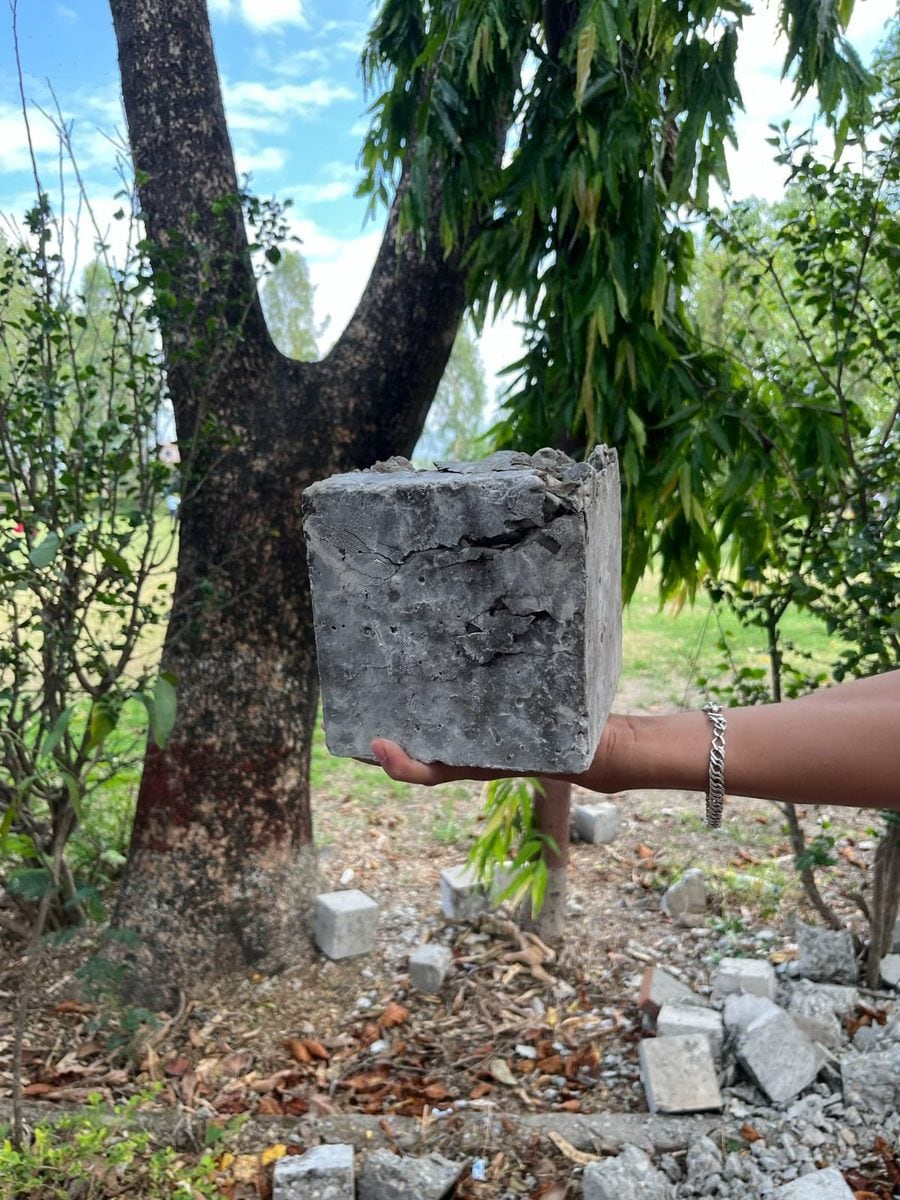
Fig. 01 · Cube at failure
Key findings
The recycled aggregate passed every acceptance limit: Los Angeles abrasion 36.49% (limit 45%), impact 21.37% (30%) and crushing 24.67% (45%).
Old mortar on the particles raised water absorption to 2.5%, which the mix design has to correct for.
28-day strength fell from 27.0 MPa to 25.28, 23.56 and 22.23 MPa, keeping 94%, 87% and 82% of the control.
Every mix still exceeded the 20 MPa characteristic strength of M20.
28-day compressive strength · MPa
Control27.0
10% recycled25.2894%
20% recycled23.5687%
30% recycled22.2382%
M20 · 20 MPa
Conclusion
A 10% replacement costs only about 6% of strength, recoverable with a small mix adjustment, so it suits beams, columns, slabs and footings; 20–30% suits non-structural work like footpaths and kerbs. Recycled demolition waste is a workable aggregate for the region, and the real barrier is regulation, not performance.